


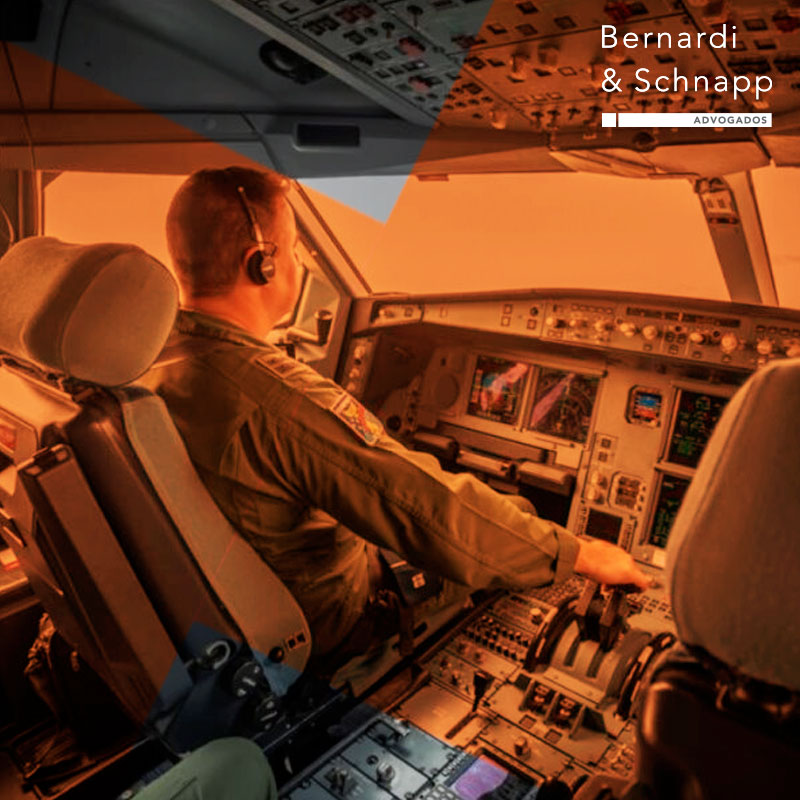
Artificial Intelligence and Flight Crews: Replacement or Collaboration?
The popularity of Artificial Intelligence (AI) is increasing, with the market projected to reach USD 1.8 trillion by 2030 across all segments, according to statistics from GrandViewResearch. At the same time, the aviation industry has been facing a talent shortage, as reported by Boeing, with demand expected for 602,000 new pilots and 899,000 new cabin crew members worldwide by 2041. Will the AI boom be the answer to aviation’s most pressing problem? “AI has the potential to alleviate talent shortages in the aviation industry, but it is unlikely to completely replace human crews anytime soon”, says Jainita Hogervorst, director of Aerviva Aviation Consultancy, a Dubai-based international consultancy specializing in recruitment and document management. “While autonomous aircraft may become a reality in the distant future, the aviation community remains wary of entrusting full control to AI due to safety risks and the complex nature of flight”, she added. According to the US Federal Aviation Administration (FAA), human error is the leading cause of commercial and general aviation accidents: (60-80%) of aviation accidents involve some form of human error. Reducing the tasks in which humans intervene can be beneficial in reducing the number of potential accidents. “Automation can be beneficial by freeing pilots from repetitive or less rewarding tasks, allowing them to focus on critical decision-making processes”, says Hogervorst. She adds that, “However, this shift also transforms the pilot’s role from an active operation to a supervisory one, which humans may struggle to perform effectively for extended periods.” One of the main concerns regarding cockpit automation is the potential loss of situational awareness. “Human pilots have an intuitive understanding of their environment, which allows them to respond quickly to unforeseen circumstances. AI systems, while advanced, may not have the same level of instinctive understanding,” she explains. With an increasing reliance on AI and automation, there is a risk that pilots will lose their manual flight skills. This can lead to overreliance on technology, leading to complacency or late human intervention when the system encounters unforeseen challenges. AI systems can sometimes behave unpredictably, making it difficult for flight crews to fully anticipate or understand machine actions. Maintaining continuous monitoring and understanding AI’s decision-making process can be difficult, raising concerns about its reliability in critical situations. For cabin crew members, AI is unlikely to completely replace them, but it could significantly enhance their roles. “AI can automate tasks such as answering common passenger questions, assisting with flight information, booking changes, and tracking luggage. This allows cabin crew to focus on their core responsibilities such as passenger safety, emergency response, and personalized customer service,” says Hogervorst. To address the challenges of integrating AI into aviation operations, the European Union Aviation Safety Agency (EASA) has presented an AI roadmap in 2020. “The roadmap outlines a phased approach to the implementation of AI, starting with AI/ML applications that assist and enhance crew capabilities in tasks such as preparing and executing flights. The second step involves enhanced human-machine collaboration, with the human retaining full responsibility. In the most advanced stage, the machine operates autonomously, but remains supervised by a human. The final stage contemplates total autonomy, but human participation is maintained in the project and supervision phases”, explains the director of Aerviva Aviation Consultoria. The increasing rise of AI in the aviation industry promises to be a solution to the talent shortage, but while it “may take some of the pressure off pilots and cabin crew by automating certain tasks, a complete replacement of AI flight AI seems unlikely in the near future,” concludes Jainita Hogervorst. – https://aeroin.net/inteligencia-artificial-e-tripulacoes-de-voo-substituicao-ou-colaboracao/


